Sponsored by 👇
|
 |
|
|
|
|
City limits |
Mayor Andrea Davis speaks to what the city can do with limited resources and authority. Challenger Shawn Knopp says the city should just limit its spending. |
by Arren Kimbel-Sannit
|
For Missoula Mayor Andrea Davis, all things flow from careful planning.
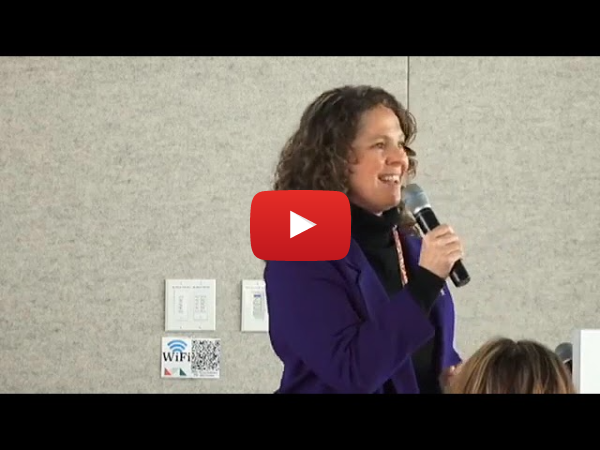
She made that much clear in a City Club Missoula mayoral debate earlier this week, navigating thorny questions about the city’s affordability crisis, rising property taxes, a persistent budget deficit and other topics with technical precision. The gist? Some things, the city can’t fix, at least not alone. But for those issues within the city’s “decision making space,” as she put it, the path forward lies in the deliberate and data-backed application of revised zoning codes, public-private partnerships, and city programs and plans with somewhat obscure, acronymic names. (One should not confuse the Downtown
Master Plan with the Downtown Safety, Access, and Mobility, or SAM, Project, of course).
Chief among those is the Our Missoula 2045 land use plan, which, along with the forthcoming unified development code, provides the regulatory framework for increasing housing of all types in almost all areas of the city, Davis said.
“Whether you’re here now or whether you’re looking at this community because this is somewhere that you might want to land by choice, how do we make room for the growing needs for our community?” she said in her opening remarks. “By being focused on the land use plan, and now undertaking a unified development code, we have a zoning framework to not only meet the needs of today, but also future growth. A more predictable, easy to use, consistent zoning code will make it easier to build more homes of all types of our community.”
|
"A more predictable, easy to use, consistent zoning code will make it easier to build more homes of all types of our community.” |
On the diagnoses of the city’s biggest problems, Davis and her opponent, Shawn Knopp, broadly agreed, as they did on the need to build more houses to alleviate home price and rent increases. But Knopp, a longtime Missoulian who works as a project manager at Montana Glass, has his own vision for the city: He said rising property taxes was one of his biggest concerns and that one solution is to rein in city spending. The city has repeatedly raised property taxes in recent budget years, he noted, compounding the strain that homeowners feel from increased valuations, and yet the city still has a multimillion dollar budget deficit.
“We have elders — I have one who was in my shop yesterday, and she is hanging on by a thread, because her social security doesn’t quite cover property taxes for the year, and she’s probably going to be forced to sell out of her house,” he said. “The problem is, with the prices of what houses are these days, where does she go? We’ve got to find a way to fund things without raising taxes.”
That may well mean cutting services.
“Until we can have a budget where we don't have to raise taxes and put people out of their homes, choices are going to get hard, trying to figure out what we’re going to fund,” he said. “We have to have fire, we have to have police, we have to have roads — those are going to be the top three priorities on any budget that I’m a part of.”
The rest, he said, would be funded on an as-needed basis.
|
 |
|
|
Davis was elected mayor in 2023 to carry out the rest of the term of the late John Engen, becoming the first new mayor in decades. At
the time, she beat out Councilmember Mike Nugent with a handy 5,000 vote margin. This year, she has endorsements from Nugent and much of the rest of the city’s political establishment, and cruised through a primary against two candidates with little political experience. Receiving 27 percent of the vote in that primary, enough for a second place finish, was Knopp, who is making his third bid for the mayorship.
“Last time I was in here, one of the questions I was asked was what is your weakest point, and my answer was public speaking, so bear with me,” Knopp said in his opening remarks Tuesday. “The second question was what do you do to correct that or improve on that, and I said, ‘Run for mayor.’”
It sometimes seemed hard for Knopp to find room to disagree with Davis during the debate. After Davis’ opening statement, Knopp said he would “go out on a limb here and agree with almost everything Andrea said” — basically everything but whether or not the city should be increasing spending. Responding to a question about affordable housing, Knopp was quick to give Davis kudos: “Andrea is amazing at what she does with the housing stuff. I will not say anything bad against her.”
After all, Davis, who spent more than a decade with housing nonprofit Homeword prior to becoming mayor, is something of an expert on urban development. And she didn’t hesitate to put that expertise on display this week. (To put it one way, Davis generally had lots more to say than Knopp on any number of issues. “I’m glad I’m short so you can go long,” he quipped.)
|
“Until we can have a budget where we don't have to raise taxes and put people out of their homes, choices are going to get hard, trying to figure out what we’re going to fund.”
|
|
The candidates responded to questions from moderator Rob Chaney, a longtime Missoula journalist, as well as from the lunch-hour audience at the public library Tuesday. Almost all questions had something to do with the city’s relationship to land and development.
Davis touted municipal investments in affordable and workforce housing projects that will bring more than 100 income-restricted units to the market, but was also straightforward about the limits of her authority. When asked what the city could do to respond to the affordability crisis, she said that affordable housing is an area of “deep passion, commitment and expertise” of hers, but that “the city doesn’t have ultimate decision space and power over this.
“We live in a capitalist system in a state that holds up private property rights very significantly,” she continued. And the state, in this case, hasn’t made it easy for cities to directly add to the housing stock.
But what the city can do is follow the land use plan, looking for opportunities to add residential capacity through infill and the development of city-owned land. There are 45 acres of such developable city land, each with its own menu of possibilities and connections to any number of city growth priorities — affordability, walkability, mixed-use development, increased green space and more. But at the same time, she said, the city must avoid overplanning, even if that means asking less of private sector developers in order to incentivize them to build more. And, as someone asked, what if all that growth depletes the city’s natural resources and open space?
Well, the answer there lies in the land use plan as well, she said — infill development is less environmentally impactful than sprawl.
Knopp, for his part, generally agreed.
“The real answer is we need to build, build, build, and until we have enough housing, prices will never come down,” he said. He also put forth an idea that’s been circulating among local tenant unions and progressive candidates — to finance permanently affordable housing with municipal bonds instead of property tax increases.
The candidates did diverge on matters of public finance. In particular, Knopp was critical of the city’s use of tax-increment financing to support redevelopment. He said half of his tax bill goes toward an urban renewal district, which uses tax dollars to incentivize the development of blighted areas. That means, he said, that districts are using up taxpayer money that would otherwise support schools and the city budget. “So I think it needs to be scaled back,” he said.
But Davis said that the city uses tax-increment financing in places where there was minimal investment previously, and that the idea is to support infrastructure and business development that will grow the overall tax base over time. And these projects can support other goals, she said, pointing to the Riverfront Triangle development, which will add $7 million to the city’s affordable housing trust fund.
“It’s still affecting the bottom line,” Knopp responded.
Although much of the debate focused on housing, the candidates spent relatively little time discussing homelessness, outside of Knopp expressing skepticism about the amount of money the city was spending on the Poverello Center. Nobody questioned the mayor about two of the most controversial moves the city has made during her tenure — the council’s vote to ban camping in city parks, and her decision to close the Johnson Street Shelter.
When someone asked a question about what each candidate could do for the city’s most vulnerable, Knopp said that protecting the vulnerable is why he’s running for mayor — and by most vulnerable, he meant elderly people being taxed out of their homes. That’s a community with some significant need and understandable anxiety, especially with a sparse eldercare landscape, but one that, by definition, already owns homes.
The needs of renters were addressed in one question, but both candidates said that while the city is able to make some direct investment in affordable housing, it needs the Legislature to lead the way on something like a renters’ tax credit — which, given the staunch conservatism of most state lawmakers, seems somewhat unlikely.
And while Davis did not fully embrace Knopp’s fiscal hawkishness — ”We know that we have services that people need and want in our community,” she said — she wasn’t shy about the city’s budget situation, either. The city can get creative, she said: She managed to reduce the deficit this year with judicious spending and some reallocation of existing funds to needed services, not to mention a tax on short-term rentals. But some services simply require taxpayer support. Responding to Knopp’s concern about elderly homeowners, she noted that the city could offer a grant program to help seniors stay in their homes, “but that will need to be paid for by other taxpayers.”
|
The ledger #️⃣ |
77,833 |
Ballots for municipal races and a countywide infrastructure levy that went out to voters in Missoula County this week, according to the county elections office. This is an all-mail election, but voters can drop off their ballots until 8 p.m. on election day, Nov. 4. The office notes that because of
changes to state law, voters must now write their year of birth on the ballot envelope in addition to their signature. Voters have until Nov. 3 to register or change their registration.
|
The week ahead 🗓️ |
Another “No Kings” rally is planned for Missoula Saturday at 10:30 a.m. in front of the county courthouse. Organizers say it’s one of 2,200 protests against the authoritarianism of President Donald Trump nationwide. A previous No Kings rally in Missoula in June drew more than 6,000 people.
The city is hosting an open house for the public to examine plans for the development of the Southgate Crossing project, now known as Midtown Commons, Wednesday, Oct. 22, at 4:30 in the Stockman Bank building on Brooks St.
Find a list of all upcoming city meetings here and county meetings here.
|
|
|
|
|
|